THIS WEEK IN AI
From Shoes to Servers: What Allbirds Just Told Us About the World We're Living In
THIS WEEK IN AI
Claude Design just dropped, let's hope our jaws do too.
Last week, Anthropic dropped Claude Design, a brand new tool built to create on-brand visual content like social graphics, mockups, and marketing assets. It's available to Claude Pro, Max, Team, and Enterprise subscribers. We'll be poking around in it soon to report back!
From Shoes to Servers: What Allbirds Just Told Us About the World We're Living In
You may have heard about the Claude outage last week. Our whole team felt it. Mid-task, mid-project, mid-thought, and then nothing. It came back within the hour but it got us thinking. (More on that in the Opinion section.)
While not stated, we're guessing the outage was likely caused by a surge in demand. And that surge is exactly what brings us to the story we actually want to talk about this week.
Allbirds is becoming an AI company.
One of the co-founders, Joey Zwillinger, said something on a podcast recently that stuck with us. He wasn't even talking about the switch when he said it. He was talking about how they built the brand in the first place. He's a renewables expert who cared deeply about the carbon footprint of what we consume, and he partnered with a co-founder who wanted to reimagine what a shoe could be made from. Natural materials. Lower environmental impact. In an industry where nobody was asking that question. Then he said this: "Novelty and innovation is something consumers never get tired of. We came out of the gates with no advertising and sold $1,000,000 worth of shoes in the first month."
By no advertising he meant no paid advertising. They just had a story worth telling, and people told it for them. For free!
That's who Allbirds was at their best. Just a shoe. But they thought differently about what it was made of and who it was for, and that was enough to build something remarkable.
Then trends shifted, sales slowed, and the brand quietly struggled. This week they announced they're selling the Allbirds shoe brand and name to a brand management company (who will keep making the shoes), while the original company relaunches from scratch as NewBird AI, with plans to buy and lease out high-performance computing hardware (the specialized computer chips, called GPUs, that power AI tools like Claude and ChatGPT) to meet the exploding demand for AI infrastructure. They secured $50 million to make it happen and their stock jumped over 500% in a single day.
With this pivot, it seems like everyone is ditching what they did and switching to AI. But that doesn't need to be your story. Let's come back to what Joey Zwillinger said on the podcast. "Consumers never tire of innovation. If you are able to artfully bring something highly technical but edit it down and curate the message around that to the consumer in a meaningful way that matches something that they are struggling with, there are unbelievable untapped opportunities everywhere you look."
And he's right.
Think about the industries that were the same for decades until one day someone came along and said, "I know we have always done it this way, but what if we did it differently and completely changed the experience?"
The mattress industry ran the same playbook for decades. You drove to a showroom, laid down on a series of uncomfortable mattresses while a salesperson hovered nearby, spent way too much money, and waited two weeks for delivery. Then Casper showed up, shipped a mattress in a box to your front door, and let you try it for 100 nights. An industry nobody thought needed fixing got fixed.
Dollar Shave Club looked at the razor aisle at CVS and said "what if we just mailed these to people for a dollar." That's it. That was the whole idea. They put out one deadpan YouTube video, built a subscription model around a product that had been the same for 50 years, and then sold to Unilever for a reported $1 billion. *mind freakin blown*
BetterHelp looked at therapy, an industry built entirely around the provider's schedule and comfort, and asked why someone who needs help has to drive to an office, sit in a waiting room, and pay $200 an hour out of pocket. They launched in 2013, long before COVID forced anyone to rethink remote services, and grew to over a billion dollars in annual revenue by letting people talk to a licensed therapist from their phone.
Uber didn't build a taxi company. They looked at the cars people already owned and the drivers already on the road and said "what if we just connected them to the people who needed a ride."
None of these companies invented something wildly complicated. They just looked at something everyone had accepted as fixed and asked what it would feel like if it weren't.
That's exactly what AI is inviting all of us to do right now.
Not "drop everything and become an AI company." (That space is genuinely crowded.) But take the thing you already do well, the thing your clients already trust you for, and ask what it would look like if AI were the advantage behind it.
We did it with our Magic AI Website Writer. Because while everyone wants a done-for-you experience, not everyone has the budget for done-for-you service, and honestly, I don't have the bandwidth for everyone either. So we built the next best thing.
The businesses that win in this next era won't be the ones who chased the AI label. They'll be the ones who took their niche, thought creatively about the experience they deliver, and used AI to make that experience faster, smarter, or more personal than anyone else in their space thought to try.
(Yes, we see the irony. We have a newsletter called The AI Advantage and we just snagged the domain and IG handle for girlstalktech.ai. Something is brewing, just not ready to spill yet. But there's a difference between building something real in this space and just borrowing the label. At least we think so.)
We don't have it all figured out yet either. But we're asking the same question in our own business every single week. How do we take what we do well and make it better, faster, more accessible with AI? That's the whole experiment.
And you don't have to figure it out alone. That's kind of why we're here!
OPINION
You're Building on Borrowed Land. Here's What To Do About It.
I had my Instagram hacked a few years ago. Hundreds of posts and 20K followers gone overnight. And in that moment, I was so grateful to have an email list because our audience didn't disappear with the account. I could still reach them.
Then came the Meta DNS debacle. You might remember it, the day Facebook, Instagram, and WhatsApp all went dark at the same time. Businesses that had built everything on those platforms had no way to talk to their people. It lasted a solid day. We were in the middle of a huge launch and instead of panic, we sent out an email. That email generated $39,000 for that launch.
The Claude outage is a smaller version of the same lesson.
Technology goes down, gets overloaded, gets hacked, and changes its terms. And if the only copy of your work, your tools, or your audience lives on someone else's platform, you're one bad day away from starting over.
This isn't a reason to stop using AI. It's a reason to be smart about how you use it.
What we're doing (and we hate to tell you what to do, but think you should too):
Create a folder in Google Drive or Dropbox right now. Call it "AI Assets." Put your best prompts in there. Any skill files or custom instructions you've built. Your workflows. A simple text doc with the prompts that have been working for you.
If anything ever happens and you have to rebuild or move platforms, you won't be starting from zero.
It takes 15 minutes and can save you a huge headache later.
I learned this lesson decades ago when I lost a school paper at 10:00 pm (that was due the next morning). Weeks of work gone. Tears were 100% shed. I still have PTSD from that moment and always back things up.
Save all things to the cloud. Even that could dissipate. Nothing is truly safe, but we can try our best to protect all our hard work.
(And if you haven't started building your email list yet, this is your sign from the heavens. Social platforms can vanish overnight. Please build your email list and back it up quarterly.)
HOW TO USE AI THE RIGHT WAY
Opus, Sonnet, Haiku (Which One Do You Actually Need?)
When you open Claude, you have options in the model dropdown.
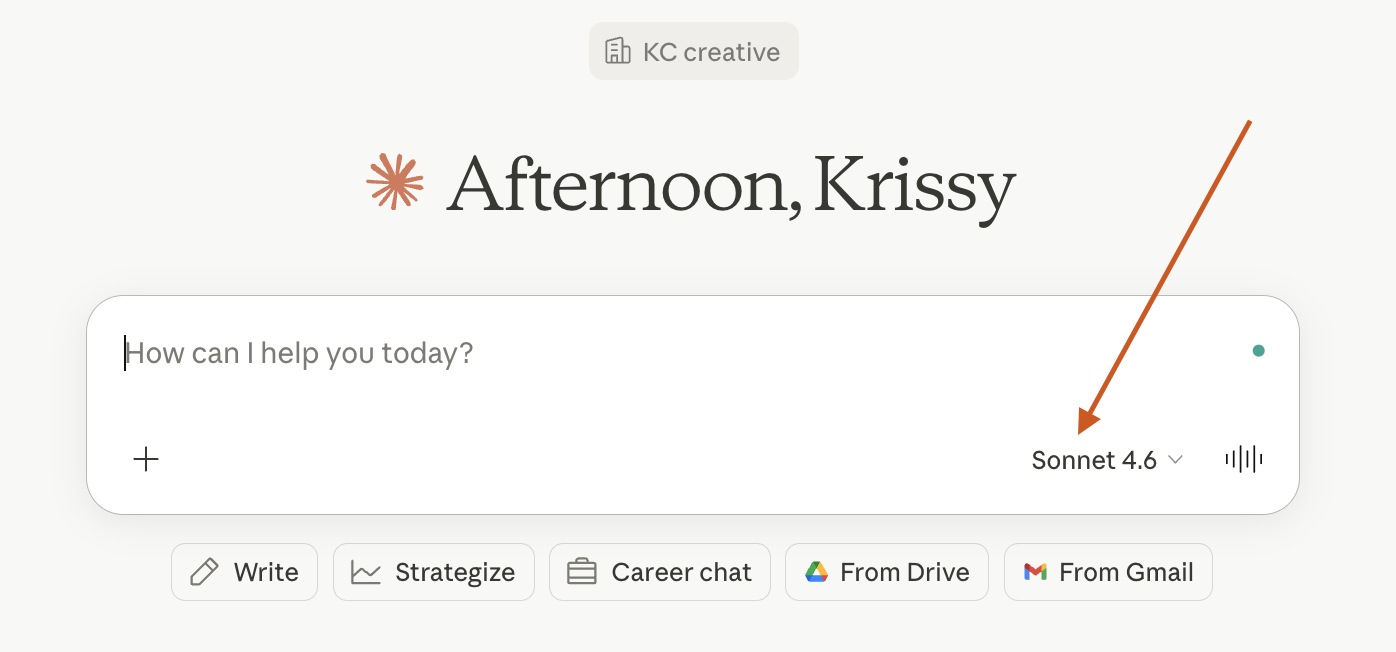
Most new users are oblivious to this. (Totally not your fault, how would you know until someone told you?) But knowing the difference can save you time and get you better results.
Before we explain them, know that Anthropic releases new versions regularly, but you don't need the newest to do great work. Pick based on your task, not the version number.
Think of it like ordering coffee. Same shop, different drinks depending on what you need.
Claude Haiku is the quick drip. Fastest and lightest. Use it for simple tasks where speed matters more than depth. Summarizing a short email, pulling action items from notes, writing a quick caption. If you just need an answer fast, Haiku gets it done. This is the model on Claude's free plan, and it's genuinely great for quick tasks.
Claude Sonnet is your everyday latte. This is the one most of us are in most of the time. It's smart, fast, and handles complex work well. Email copy, workflows, blog drafts, client documents, even tools! We built both our Schema Markup Tool and our Magic AI Website Writer TOOL while using Sonnet. Sonnet is usually the right call, the majority of the time.
Claude Opus is the full pour-over. The most powerful model. Switch to this model when the task requires deep reasoning, nuanced writing, or high-stakes output. Big strategy sessions, analyzing long documents or a book, or anything where you want Claude's absolute best thinking.
Pro tip: You'll figure out your own rhythm, but most power users end up in Sonnet 80% of the time and switch to Opus when things get complex. Don't overthink it.
One thing worth knowing: you pick your model at the start of a new chat. You can't switch mid-conversation, so if you realize halfway through that you need more horsepower, open a fresh chat and bring the context with you.
Not sure which model you're currently on? Look in your chat in the bottom right corner, it's labeled right there.
A couple quick notes: Different models use tokens at different rates. Opus uses more tokens than Sonnet, which uses more than Haiku. If you're on a paid Claude plan, that matters for your budget. (Not sure what tokens are? We broke that down in this blog.) And if you want to learn more AI terms in general, we have a full glossary here.
NEW TOOL
The Magic AI Website Writer Just Got a Major Upgrade
Our Magic AI Website Writer was released in 2024 as a ChatGPT prompt. You'd paste it in, answer a few questions, and it would write your one-page website copy.
Then it became a Custom GPT. A little more structured, a little more guided, making the user experience better and the output a little more refined.
Now it's our own tool, hosted as a standalone web app. (Claude helped us write the code for that, by the way.)
You click the link we share with you and it opens on your web browser, answer questions about your business, and it writes your one-page website copy using our actual copywriting strategies. The same frameworks we use with done-for-you clients. The headlines. The offer positioning. The way we introduce you to your audience.
And then it mocks it up, with your brand colors, into a stylized website layout so you can actually see what it looks like on the page before you ever open Canva to mock up the full design.
The difference between this and just asking Claude to "write my website copy" is everything baked into it. Our positioning frameworks, our questions, our techniques. You get the benefit of our strategy without needing to know any of it.
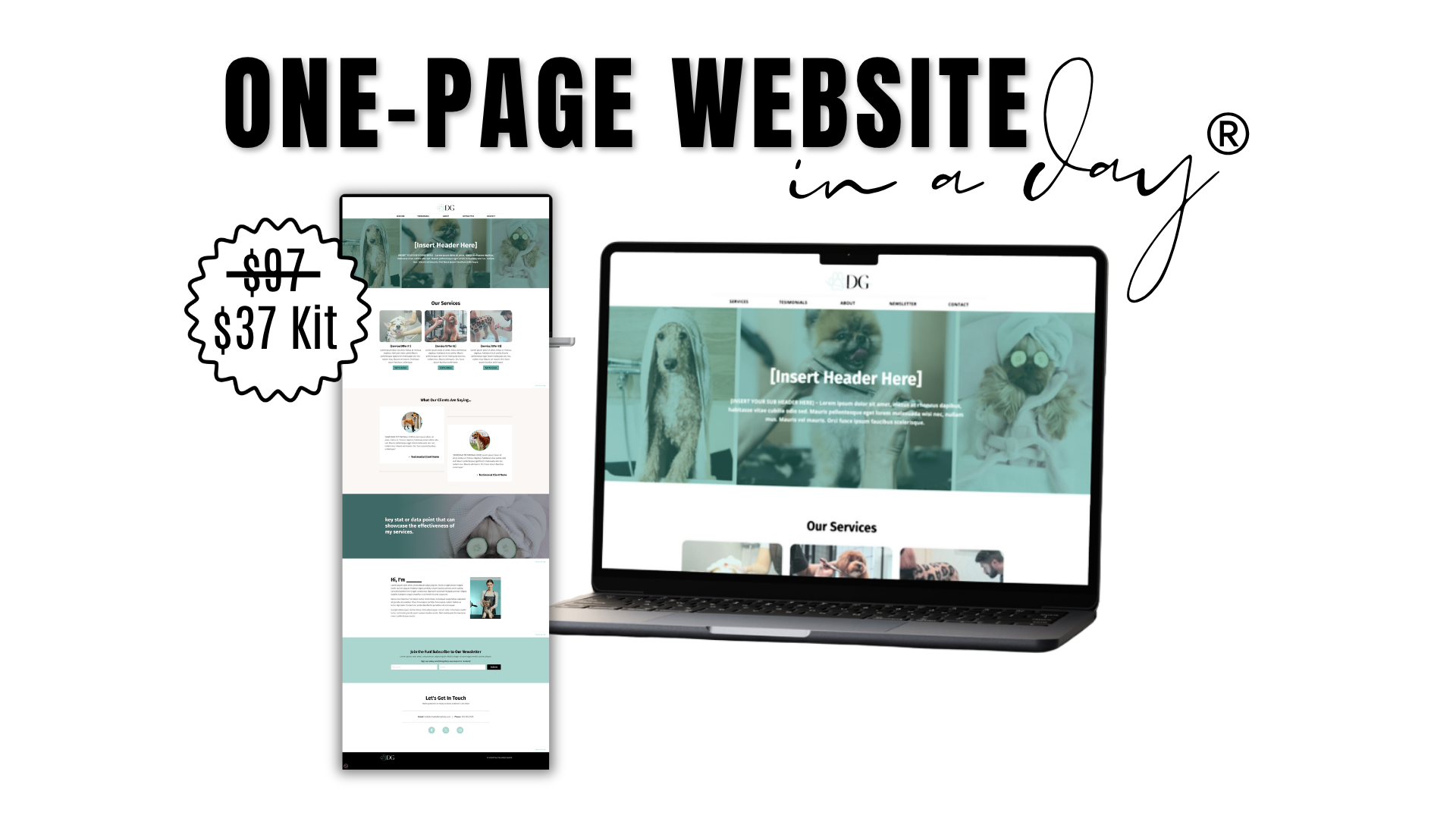
It lives inside the One-Page Website in a Day® Kit for $37. Comes with our Canva template too, so once you have the copy, you can design the whole thing yourself.
A done-for-you experience with a DIY price tag!
Grab it here → One-Page Website in a Day KIT $37
THIS WEEK WE USED CLAUDE FOR...
What AI Did For Us This Week
Streamlined our client project management calls. Our admin used Claude to scan client tasks, emails, and project notes to build our weekly team meeting prep. What used to take a solid hour to pull together manually was ready before we even sat down.
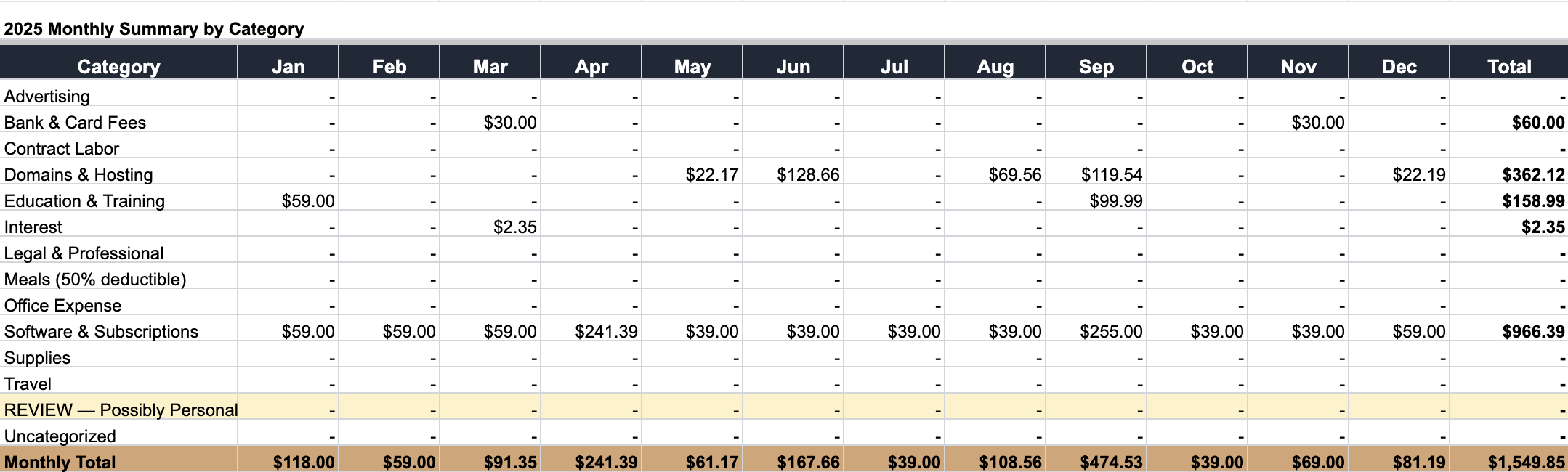
Turned 12 months of credit card statements into a tax spreadsheet. Uploaded all 12 statements and asked Claude to categorize by card, type, and month. It handed back a fully editable Excel file ready for our tax professional. As a super procrastinator when it comes to expenses, this saved me HOURS of work. (I'll drop the prompt you can use in the members-only section of this newsletter)
Helped write a social post. I plugged in an idea for a social post and it helped me split it into separate text for a carousel. If we are being fully transparent, which we are, we are still doing most of the image design ourselves. Claude isn't meeting our brand standards for Instagram visuals yet, and we'd rather say that than pretend otherwise. But we are still working to figure out how to streamline this and will share when we are there! And we hope the NEW Claude Design is our answer!
We used it for a few other things, from weekly meal prep to turning a traditional Chicken Devon recipe into a carnavour-friendly option.
I hope to set up my Cowork soon. I found out it only works on updated systems, and my computer is too old to run the newest system. A hiccup you may run into if your computer is aging! Mac minis are all the rage to grab and set up Claude cowork on, so if you have been thinking about it, you will likely have to wait until summer for yours to arrive. I beat the rush, and it will be here this week!
RECAP FROM OUR DESK TO YOURS
The outage reminded us that owning your stuff matters and backing up your email list, your assets, your copy, skills, prompts etc is worthwhile.
If your website copy has been sitting on the to-do list, now's a good time.
The Magic AI Website Writer is inside the One Page Website in a Day Kit for $37 → kandccreative.com/offers/DM4pqqK7/checkout
Not an AI CLUB member yet? Join The AI CLUB HERE for $5.55/month and get the extended issue, a free tool, skill, or prompt every month, and member deals on everything in our shop.
BONUS | For AI Advantage Members
This week's featured deal in the AI shop - 10% off the One-Page Website in a Day KIT (includes the Magic AI Website Writer)
Expense Prompt to take your credit card statements and turn them into a fully organized and editable Excel spreadsheet that looks like this!